
 “F*** sustainability. I just want a bed.”
—
Dear Readers,
The Mili-Tent is a bust.
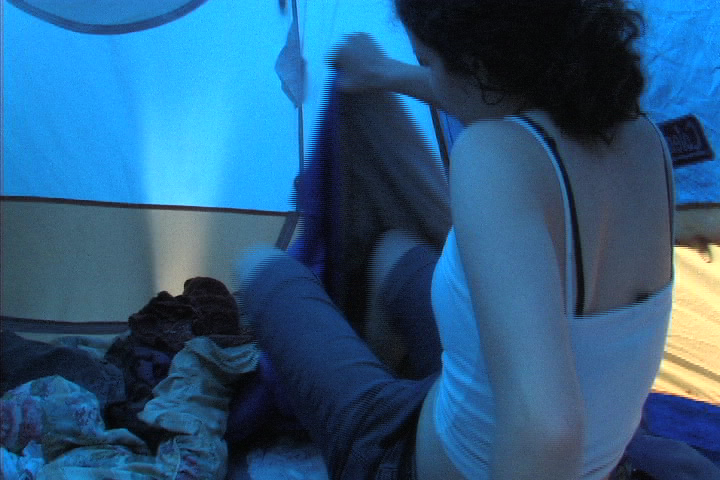
On May 1, 2008, I moved into a tent in the woods within Pittsburgh, PA. It was in my mind an easy solution to a complicated problem: that of how to dwell sustainably.
Without the time nor interest in building a more permanent shelter, I figured a reused item (like a good old tent) would do the trick. A tent fulfills several principles of sustainable living:
- Reduce the size you take up. A 6′ x 7′ tent is the perfect example of how humans can downsize, leaving more space for other living creatures and ecosystems.
- Get outside more. Living in such a small space, that can truly only accommodate sleeping, requires that I step outside more, and consider the outside world and my community interactions more like “home” than my own four walls.
- Use sustainable materials. Naturally, a synthetic, petroleum based tent is NOT sustainably produced… but working with what you have on hand, and bringing no new materials into the world is a good option.
In retrospect, my ideal dwelling would be a small den, similar in size to a tent, constructed out of cob or another type of sustainable building material. This would have prevented the issues that proved fatal to the tent as a home alternative… but it would have meant a greater time and financial commitment.
In my early drafts of scripts for Sust Enable episodes, I was all set to trumpet the virtues and benefits of living in a tent. It’s not so hard!, my scripts said. I’m living an optimal, comfortable life! …The words ended up being far too ironic to even be funny. I suppose that’s what happens when you translate vision into reality sometimes. My lesson, however unflattering to me, is an important one to share.
Let’s look at what went wrong in my tent.
I had the misfortune of undertaking tent-dwelling during a particularly wet spring and summer. Unlike memorable years of drought, Pittsburgh has experienced rainshowers and thunderstorms once every 36 hours on average, it seems. Purely dry, sunny days arrive only once or twice a week! Thus, any little hole or weakness in my tent seams spells water pools. And water pools–next to bedding, fabric, and clothing–spells a mold invasion.
A mold invasion is an appropriate term for what happened in my tent. Mold spores travel through the air, and when you inhale that distinctly musty smell, you are inhaling some of those spores. If something becomes moldy, you must immediately increase the area’s ventilation, remove the item, or lay it out in the sun. Failure to do so will mean mold will quickly appear on all of your belongings.
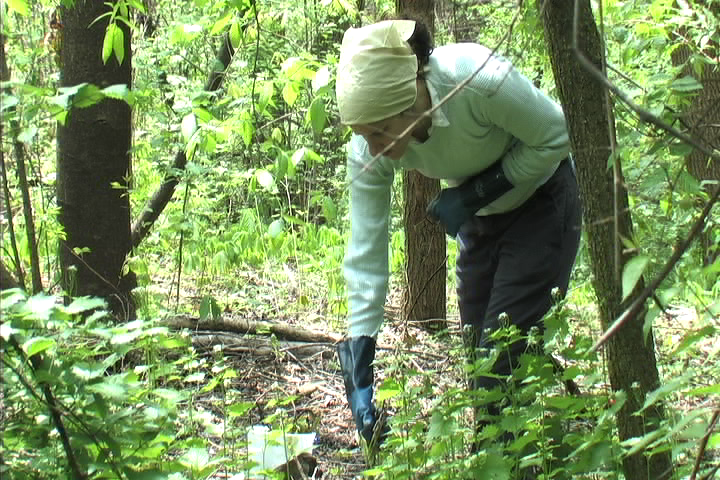
Proper ventilation, in a basic tent with a rain cover, is laughable. So is laying clothes out to dry in the sun (sun? What sun?! That was the rainiest May I can remember!) My situation wasn’t helped by living in a forest. Forest’s canopies are known for keeping in cool temperatures and moist air. Not to mention… my morning and nightly ritual of returning to my tent involved, in the more recent months, running full speed into and out of the forest, in an attempt to avoid the vicious descent of mosquito hordes. No time for dilly-dallying, or laying one’s clothes out for hours. This is a matter of survival!
As you can see, many conditions conspired to make the tent less and less of a home to me. Dampness within my tent, moldy air, mosquitoes, cramped quarters, encroaching poison ivy… one day, I simply hit the natural breaking point. Just like many other times during the Sust Enable experiment, I tested a hypothesis and it was proven wrong.
It’s difficult to remind myself that successfully testing a hypothesis is a victory. I cannot help by feel that I failed sometimes. I cried last night, fed up with playing “musical couches” and tired and frustrated, I chided myself for being “so stupid” about making choices like living in a tent, which ended up turning out so badly.
Eventually I relented, but not before I uttered the famously succinct phrase that leads this blog post. Now, I am satisfied that my rough experience will provide other people guidance and insight into how they can improve their own double-bottom-line (personal and environmental) sustainability. In this way, a patent failure of theory can indeed be a success.
In some ways, trying to live sustainably for three months is too short. In other ways, it is too long. No matter what, I decided I should either have tried to live 100% sustainably OR take on the total production of the Sust Enable episode series. The two are, to some extent, mutually exclusive. They are both full time jobs.
 That does NOT mean it’s a full time job to become 100% sustainable! How you can do it–and please learn from my mistakes–is to take your time with it. Make a commitment to do it, but slowly incorporate it into your life. It may take two years… five years… twenty years! But one day you will have the answers, with the information that is available to you over time. And you can teach your children how to live with the utmost in environmental, self and community stewardship.
This is the outcome that matters. Our society encourages competition–don’t compete with your green-minded neighbor for who can achieve self-sustaining systems first. Slow is beautiful. Slow is accurate. Slow is sustainable.
Vinay Gupta
You want a Hexayurt for the next try at this. Free design, easy to build, lots of possible materials so it can be as green as you like, and easy for the first time builder. Sort of a 21st century Walden cabin.
Vinay Gupta
Oh, and the URL: http://hexayurt.com
Julie
Hi! Just wanted to tell you that I still envy you for your gumption. I have a hard enough time keeping mold off my shower curtain and from the laundry that seems to pile up, daily.
Only suggestion (guess I shouldn’t make this until I view your entire website – blog – whatever these things are called these days)….
I would really like to see a close up picture of you and your pretty face.
Miss you! Julie
scott
coraline you should have had a canvas tent they breath alot better more expensive but well worth it i made it 11 mos but i dont own any land so i had to give it up for now what a way to live go green
rick
Hi Caroline,
I learned a lot from your blog on tenting and I appreciate the sharing of knowledge. I will be turning fifty this year and my dream since I was in my twenties was to live in a true geodesic dome tent. Due to my fears and just life in general I never succeeded at it although for a short while I lived in my van in Seattle. I had a really nice place to live in a green lush meadow for free near Burlington WA. but chickened out as their were too many weird people around and security would have been a problem. My truest fears was not being clean enough when I went to work as my job was in the public eye. Now that I am older I reconsider things and wish I could still do it. Rain in Wa. would have been a problem as well. With the obama stimulus pkg coming and the resulting economic collapse following many will resort to tent living out of sheer survival. My advice is not new and is an old trick but guy out waterproof tarps or sheets of clear polyethylene plastic over your tent and camp area. This will help protect your tent and belongings from the sun, rain and give you a dry place outside of your tent to work. Best Wishes to all of you. Peace.
Anneke van Waesberghe
Will be moving in a tented home in January in Bali and when i just read your story …. hope my experience will be different I hope. Have an infra structure in the jungle, electricity and water. I am designing and building tents and like to share my experience with those whose dream it is to live in a tent permanently. I also giving up my current home.
ash
what did u do in the three months? sumone said tarp up ur tent which is good have a tent within a structure which is waterproof itself this helps. live in england so it rains every other day all year the truth of the matter is u cant live outside without visiting civilisation intermittently to do various things unless u have alot of space which is hard if u dont have permission to expand. electriscity even in tiny amounts helps too if u have a stream close think about how helpfull a watermill would be u know people run away with anti technology way to much why strip ureself of things we had in the medievil times with a 21st century twist for example a watermill with a homemade generator attached few magnets sum copperwire and a whole load of wood whittiling. u should try again i would say as for poisen ivy never seen it but get a sickle cover up n cut it down like a mad dru =) . in 3 months im quite surprised ur living quarters did not substantially evolve but not to be sexist in any way maybe a guy would be helpfull as men n women think radically different n the pairing is what nature intended.
Jay
If you ever come back to this blog to read this post.., nice work Caroline! It’s always inspiring to see people walking the walk so to speak (or at least giving it a go!).
Just curious tho as to how you say it wasn’t possible though? I lived in a Tasmanian rainforest for about six months (then on and off for almost 2 years) and around winter if it wasn’t snowing or completely frozen (like even our drinking water and food) then it was pouring down with rain for weeks and weeks on end. I started in a cheap tent like yours (a canvas one as suggested before would be much better), but ended up with the same problems, so built a tarp structure (which even with second hand tarps, wasn’t cheap, but it was functional and we could sleep about 7 people in there) which was dry and even big enough to have a fire over which we could hang our mattresses/clothers/etc to both smoke them and dry them out, killing any mould. We also mixed tea tree/eucalyptus oil with water to wipe everything down daily. A friend in her 60’s lived nearby in a Teepee, and that seemed to function quite alright as well.
It is possible, I even know a guy who’s an executive with an NGO and lives in a tent, poos in a bucket, dumpster dives a lot of his food, but still rocks up to work every day in a suit and tie.
Ever thought of being a bit more prepared and giving it another go? I can promise you at least three things.., it’s definitely not easy, but it is possible and can be a lot of fun! Good luck with future endevours hey! Hope you keep your avant garde spirit! 🙂
yeshlekhaesh
hey just to let you know, there are some old tricks i picked up when we used to go fruit picking every year- put down a “floor” of pallets, cover it with something like lino or plastic to stop the damp coming up, then if you can find some old carpet or rugs put them down for insulation. Pitch the tent ontop of this then get the biggest tarp you can afford an pitch it above the tent. Dont just hang it like an awning it will fill up with water and/or blow away (after dumping loads of water on you). you have to site the tent with its “back” to the prevailing winds and peg down one corner of the tarp behind the tent, the oposite corner (where the door is) you tie to anything higher than your head (get a star picket if there are no trees handy ) the other two corners are pegged down along side the tent walls so you are almost wrapping the tent up or creating a cave. Does this make sense? Experiment and you’ll be able to work it out. Anyway, you’ll be toast warm and dry in that! 🙂
The poenix
Hi iv created a cave wit tarps coveredit so its invisible, have nearby stream, i was wondering on the inside of a half earthen dun trench and tarped covered roof of te cave souold tarps be placed on the walls of ir aswell? i went and gathered a load of carryer bags and created a waterproof barrier and im still adding to it, i liked the pallet idea for the ground and dam rising issues,im going to gather somepallets and cover them to safeguard rising damp, vetilation for a 22 foot cave im not sure of any suggestions? alsosolar pannels and batteries i need advice on that as well as heating in te cave,iv looked at the dekota fire pit (smokeless fire) and have dug one, the cave iv made as a 2part abode with the entrance being the main place of entry, its round shaped and sizing of15 ft by 15 foot with a dustbin lid door covered with canopy and a anti debris spillage rim, i glued the camoflage to it to hide it, iv dorred off the inside 1st room from the main to stop any brreces fromother people or animals, i have 2 cats and ave made a catflap, groundcover is anoter issue i was going to ask about and also i was goint to mentionaplant to u all called russian vine (mile a minute) imgoing to plant this all roundthe tops of te tarps to cover it, let me knoiw any products, macinery, gadgets, air supply , ventilation, mold, dampness methods im very close tocompleting my projectbut need ur intell
The poenix
omg i didnt spell check this b4sending its not dun trench its dug