

 Blogging, social news, peer-to-peer philanthropy, microblogging, social networking, wikis, video sharing, and more. These are the new agents of change.
Back in May, we penned the original 10 Ways to Change the World Through Social Media. Though most of those first 10 are still relevant, the pace of innovation and advancement on the social web means many more have emerged in the past five months that deserve attention. These are the tools and resources that individuals, corporations, and nonprofits alike can use to communicate, create, and connect on the social web…for social change.
 1. Blog It Out: When the die is cast on social media and final judgments are made, blogging will reign supreme as the single greatest force in Web 2.0. Whereas social networking is broad and shallow, blogging is deep and focused. That’s the power behind Blog Action Day, which takes place this Wednesday, October 15th, 2008. It’s a day when bloggers the world over draw attention to a single issue and (hopefully) inspire action. This year’s topic is poverty. And given the current financial crisis, it would seem many bloggers have gotten a head start.
 2. Twitter Green Events: In the first 10 Ways, we wrote about the Twitter greenstream, a tagging mechanism that organizes and aggregates Twitter messages (Tweets) about doing green things. What’s evolved since then is the widespread use of unique Twitter tags at events. Most recently, we covered West Coast Green by tagging our Tweets with #wcg08. This helps people at the event to find and meet up with fellow Twitter folk. It also enables those who aren’t attending the event to follow what’s going on and what’s being said in real time. There are a couple ways to do this. One is to follow through Twitter Search (formerly Summize), where you can track keywords and tags. Another is to send a Tweet as follows: “track word: [insert keyword]”. And then you’ll start receiving all Tweets with that tag or keyword directly into your feed.
 3. Contribute to a Green Wiki: We’ve written about Creative Citizen and Huddler Green Home, both of which offer wiki platforms where you can learn about green products and solutions as well as contributing to them. The latest player in this space is none other than Wikipedia founder Jimmy Wales. Wikia Green is part of the for-profit network of “wiki communities on any topic people are passionate about.” We’re clearly passionate about green and green blogging. As of this writing, there are 714 articles, and it’s received coverage from top tech blogs Mashable and CNET, as well as the usual suspects: The Daily Green, EcoGeek, and La Marguerite.
 4. Help an Entrepreneur: Kiva.org is a world leader in “peer-to-peer philanthropy” where first-world citizens can assist developing-world entrepreneurs through small “micro loans”. The credit card company Advanta recently partnered with Kiva on the Kiva B4B (business for business) credit card, where loans originated from one’s card are matched by Advanta up to $200 per month. In fact, we just loaned $50 to Bahodur Malikov of Tajikistan to expand his footwear business, which means that he’ll actually receive $100 of the $750 he needs (his loan is now fully funded). The thrust of the Kiva B4B credit card and its online community is to give entrepreneurs (like us) a simple and affordable way to support fellow entrepreneurs and do something good. Disclosure: Kiva B4B is a Max Gladwell sponsor.
 5. Network With Us: Max Gladwell is the nexus of social media and green living. Beyond the central blog, we have several networks where social-media-minded greenies can network together: Facebook Profile, Facebook Page, Facebook Blog, Facebook Group, Twitter, Ning, MySpace, Flickr, Technorati, and FriendFeed to name a few. You can join these green conversations wherever they are and follow them wherever they go.
 6. CauseCast Yourself: Debuting at this year’s TechCruch50, CauseCast is the latest entry into the social-action platform space, where members can connect on important issues and support those corresponding causes. According to the company, “Causecast empowers people who want to make change. [It’s] a platform where media, philanthropy, social networking, entertainment and education converge to serve a greater purpose.” The platform features its own social network with a news section and a cause-related widget that you can embed on your blog or social networking profile. Cause categories include animals, arts, community, environment, health, human rights, and youth.
 7. Be a Citizen Journalist: iReport and Current pioneered the citizen journalism trend by giving everyday folks like us a platform for reporting stories that wouldn’t otherwise make the evening news. More recently, YouTube launched its Citizen News Channel/Vlog. All it takes is a Flip video camera to join the likes of Anderson Cooper and Christine Amanpour. Though it hasn’t gained a ton of traction so far, Citizen News does have potential.
 8. Check Your Headlines: Really Simple Syndication (RSS) has revolutionized how we track and access information on the web, but for many it’s just not simple enough. That’s why we have AllTop. This aggregation of high-quality blog feeds enables anyone, including avid RSS users, to scan the most important headlines from the blogosphere on a single page. Think of it as a magazine rack of blogs. Organized by topic, you can see all the change in world every morning by checking Green.Alltop.com, Nonprofit.Alltop.com, and Good.Alltop.com. Take action accordingly.
 9. Vote for Green Content: The first Top 10 featured Hugg.com, which is Treehugger‘s answer to the wildly popular Digg.com social news site. These enable users to vote for good content, make it popular, and give it the attention it deserves. This is the democratic web. Since then, EcoURLs launched as a new eco-oriented social news site, but it also has a unique approach. In addition to just voting stories up and down, users can push that content to the major social news and bookmarking services: Digg, Reddit, Buzz, StumbleUpon, and del.icio.us. It’s still gaining traction, but this could become the hub for all of the social web’s green news.
 10. Belly Up to the Bar: The wildcard entry on this list is the brand new Greenbar Toolbar. It’s essentially a stripped-down version of the Flock Eco Browser for both Firefox and Internet Explorer. According to the company, it gives you access to the “best [green] blogs, websites, feeds, gadgets, resources and more” and “features embedded Twitter, a built in email system, Google search, and a pop-up blocker.” Facebook integration and select RSS feeds are also included.

Featured photo credit: giulia.forsythe via photopin cc































I would like to add our social community People for Earth (www.people4earth.net) and wiki for eco-friendly living where you can network, share your green events, blog, add news, contribute to a green wiki (eco guide), add your organization …
You are welcome to join.
This is great stuff, Max. Some of the above causes I’ve heard of and others are very new to me.
Oh, and everyone who blogs in any fashion (whether a full-fledged one or a microblog like Twitter/Tumblr/Posterous) should write something on Wednesday about poverty. The laws for Blog Action Day don’t require the blog article to be 1,000 or more characters; 140 is fine with me.
these are great sites. never heard of greenbar – downloaded it and it’s awesome!
Dave
Yo dudes, here’s another one. It speaks for itself, but basically “Spend 5 seconds upvotting the articles to get their message out”
http://officeofstrategicinfluence.com/clicks/
It’s great to the green movement embracing social media. Another green social media site is SustainLane.com, which has the US’s largest database of green product reviews, allowing visitors to vote on and rate green products. http://www.sustainlane.com
All according to pla…
Wait… I hate these sites.
And the fact I’ve never heard of most of them makes me question the kind of difference one can make since these aren’t very well known.
You missed one of the biggest resources in the US period – one that’s already built out in some communities – and should be on the forefront of all of this – community television.
I didn’t know about ecourls. Mass social action via the net could really revolutionize our business models quickly, especially if consumers make good decisions on their auto and home purchases.
Thanks for the great list of possibillities. I will most certainly recommend them to the people in my own community and try to think of European or Dutch sites like those mentioned here.
Your European readers that want to take action on micro credit, but don’t want to go to trouble with dollar exchange rates I would advice to take a look at the Danish company MyC4 (http://www.myc4.com). Looks a lot like Kiva and Microplace, but focuses on African entrepeneurs outgrowing microcredit. They try to attract both small and large investors, and are looking how they can support African journalist one the one hand and get good coverage with usefull information for their investors on the other hand. One of the parties they are talking to about that is Africa Interactive.
Laugh all you want to at this idea but it is something that may be worth looking into.As many people know our economic system,which must continuously expand or else collapse is a root cause of many of our enviromental and social ills.Many people feel that the destruction of our natural world is justifiable because of the myth of natural scarcity.While many people understand natural scarcity is just a myth,others do not because of the fact that the proposition is not seriously challenged by science,nor in a scientific manner by the enviromentalist.
We who are interested in preserving something of our natural world need to literaly ”put our money where our mouths are”.What am I talking about? Let me breifly explain.Besides the enviromentaly destructive notion of natural scarcity,our economy tends to be at odds with our enviroment because of the fact that it is so unstable.When people suffer from the effects of economic instability,they are much more prone to accept the notion of scarcity and support economic growth which often calls for the sacrifice of yet more of our natural world.It is a well known fact that much of the blame for market instability can be traced to the fact that we use ”fiat” money,or a medium of exchange that has no value of its own.Of course there are those who believe that we should use precious metals as currency,but of course these same people generaly could care less about the consequences to our enviroment caused by the increased mining that would be needed if we were to return to the use of gold and silver as currency,or in the event our money was backed by metal as it used to be.We must ask ourselves just how valuable the so called precious metals really are.After all the practical uses of gold and silver are limited and you certainly can not eat,drink or even practicaly build shelter with the rare metals.
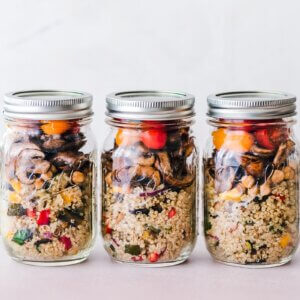
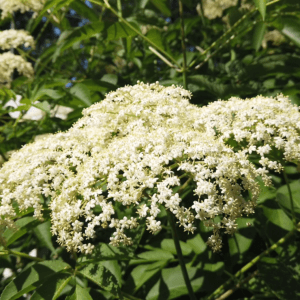
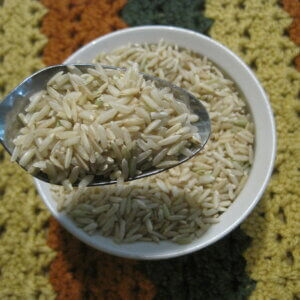
Now suppose it were possible to desighn a currency that had its own value,and at the same time was crafted from natural products which are renewable,and the crafting of this currency had minimal effects on the enviroment? Also suppose this currency could be used by the holder for purposes other than trading,and the alternate use of this currency was non polluting? I am sure that by now you know what I am suggesting !Yes we need to create a means of exchange that is desighned from food products either grown or harvested in the wild.Why would it not be possible to invent a currency that by utilizing common freeze drying techniqes ,the new currency could be stored indefinatly,used just like we use money now” with only minor adjustments”and besides the usual use of this currency,it could actually be consumed ,and would provide a person with all of the nutrients needed for a particular amount of time? Yes,now that was a run on sentence ! I hope I have made my point?
This new edible currency could be used and stored much like vitamines,come in various shapes and sizes depending on the needs of the holder.Our new edible currency could be crafted from any number of natural sources including vegtebles,mushrooms,beans,herbs fruit nuts and even dried meat. Has any one ever considered the amount of protein that could be retrieved and processed from a single pecan or walnut tree!? It is interesting to note that there is a type of spruce tree which produce spruce tips which are edible and contain the same amount of vitamine c as an orange.With the cooperation of concerned enviromentalists,a few inventors,naturalists and other scientests including nutritionalists a currency could be desighned which not only had a practicle value,but also expressed natural abundance in such a way that economic growth could take place as needed,but growth for the sake of growth could be avoided,thereby greatly reducing enviromental degradation greatly.
I am not a scientist,nor am I an economist,so therefore I am limited as to the development of this idea on my own.Surely there are folks out there reading this who can take this idea and run with it?
Thanks for the excellent resource! Jim
There is no question that social media IS a change agent. The leverage available is vast and it’s fast.
No matter what you think about it… it’s already happening. Much good can come out anytime good people join in doing positive, constructive things.
Leverage. That’s all it is. Global, High Velocity Leverage and near instant visibility.