
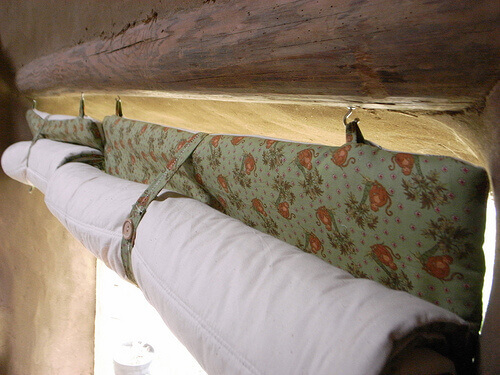
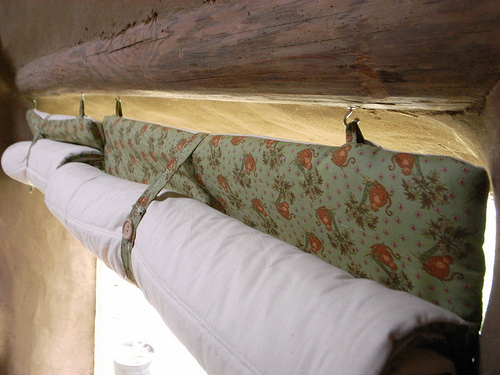
Windows are very frequently a source of lost heat in your home. Older homes may suffer from only having single-paned windows, which lose a large amount of heat, and even newer double-paned insulated windows lack enough insulation against cold winter temperatures and wind. However, you can save home heating costs and easily bulk up the insulation around your windows by making your own inexpensive thermal curtains.
Thermal curtains are energy-efficient window shades that insulate against the cold around your windows. They are a thick and heavy buffer and can significantly decrease the money you spend on energy to heat your house. If you are handy with a sewing machine or know someone who is, there’s not much more you need than some old blankets or comforters, fabric, and a fair amount of time.
How To Make Thermal Curtains
Old comforters make for a great filling in thermal curtains, especially since they can be had for very cheap ($5-10) at your local thrift store. Get a few of them. Doubling the comforter will increase the insulative value and add weight to keep your curtains pressed tightly against the wall.
Measure your window and find something strong and solid (imagine a rigid dowel or heavy stick) to span the bottom of the window to give your curtain some structure (and to make it easy to roll up and down).
You can use just the comforter itself for the curtain if you are looking for a very quick and dirty solution, or you can pick out some fabric to be sewn over the material for a more pleasing aesthetic.
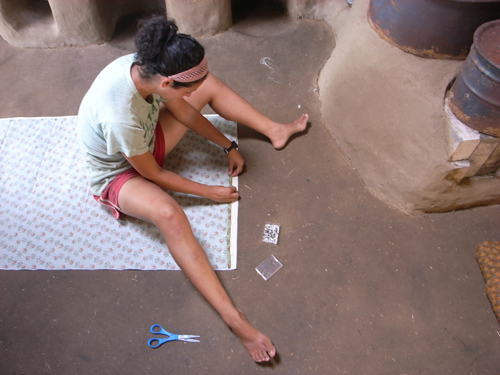
Cut your fabric a couple inches larger than the actual window measurements. To make cutting your fabric easier, place the two pieces of fabric with the fronts facing each other and your comforter layer(s) all in one pile and cut them simultaneously. Be sure to pin them together to keep them from shifting while you cut and then sew the fabric together.
Next, sew the materials together on three sides. On the final fourth side, sew about 1/3 of the length from each corner, leaving an unsewn portion in the center. Use the hole that you left unsewn to flip the curtain right side out. Then place your dowel or heavy stick between the layer of fabric and comforter at the bottom of the curtain. Finish the curtain by sewing your hole shut.
You can use a variety of methods to actually hang your new thermal curtains. You can sew velcro to the top back side, or sew small fabric loops on the top and hang the curtain from hooks mounted on the window frame. Be creative.
Thermal curtains are a cheap and easy way to save energy costs in your home. They can largely be made with reused and recycled materials.
Roll them down on cold winter nights, or even during a hot summer day to block the sun’s rays and save energy costs!

































WE cut large cardboard boxes to fit window, wrap one side in foil or leave plain ,and wrap all in plastic and place in window. Use in windows we dont open in the winter such as behind the bed. From outside the cardboard looks like a plain curtain. I have also painted the window side of cardboard white. Noone knows its an old refrig box in my window but me !!.
Thanks for sharing this idea. How do you secure the cardboard to the window? I was thinking of using tape.
I use foam insulation sheets you can buy at home Depot. I just slid them in-between my double windows.
How about:
Put a casings at the top and bottom, then use a spring-tension curtain rods. No need for weights, then it can be rolled and “hung” higher during the day.
This method hangs pretty loose. The tension rods provide a tighter fit. The rolling/tying to get day light would get old within a week.
No hooks, leaves no trace, come Spring and Summer.
You can also use “Foiled Bubble wrap” Make a Pillow case/duvet style sleeve putting the bubble wrap in the middle. Works well. WE do this for our motorhome while winter camping. Keeps the pillows from Freezing to the walls. 🙂
For me it’s been a layer of bubble wrap saved from purchase deliveries & stuck to the window using a light spritz of water. I love how it lets the light in while keeping the cold out. My mum used to tape pieces of vellum cut to the window size and attached with double sided tape to the inside part of the window frame. There was an air gap between the vellum & window glass of a couple inches. Enough space to create a dead air space which prevents the frigid air from penetrating the house. Again the point was to keep the cold air out yet let plenty of sunlight in. She always had drapes filled with old wool blankets she would let down at night.