
 Written by Dr. Bill Chameides, dean of the Nicholas School of the Environment and lead author of the forthcoming blog The Green Grok.
This post is Part 1 of a 2-part series on biofuels. Today’s post looks at corn; Part 2 will examine the most promising biofuels.
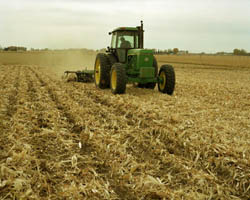
Who doesn’t want to be green? But beware of automobile ads claiming environmental benefits from home-grown ethanol. Almost all U.S. ethanol comes from corn and, as a fuel, corn just isn’t as “amaizing” as they say.
“What if we could live green by going yellow?” one TV spot asks. “What if we could lower greenhouse gas emissions,” it continues, promisingly, “with a fuel that grew back every year?” Sounds great doesn’t it? Sorry folks, it’s just not so.
With corn ethanol, we are barking up the wrong stalk. This so-called yellow fuel is not green and the rush to it is misguided. The negatives of turning corn into fuel far outweigh the positives. First a little background.
A short history of ethanol
Ethanol has been around for a long time. Some of the earliest forms of life on Earth — anaerobic bacteria — used fermentation to produce ethanol and in the process extracted energy to drive their metabolic functions. In prehistoric times humans fermented grains and other biomass to make ethanol. Most of you have encountered ethanol in your lives — in beer, or wine, or the harder stuff. Ethanol is simply alcohol.
Using ethanol as a fuel dates back to the nineteenth century. It powered some of the earliest automobiles, including Henry Ford’s first car, the Quadricycle. Interest in reviving and expanding the usage of ethanol in cars today has grown, in part, because of its perceived climate benefit.
When we burn fossil fuel, excess carbon dioxide (CO2), the chief global warming pollutant, is released to the atmosphere. This, at least in principle, should not be the case for ethanol or other biofuels (fuels produced from plants and wastes). When ethanol is burned, its carbon is converted to CO2, just as in fossil fuels. But because the carbon in biofuels is pulled directly from the atmosphere via photosynthesis, it would seem that burning ethanol does not, in and of itself, represent a net source of new CO2 to the atmosphere. (See the Department of Energy’s diagram below.)
As it turns out, it’s not that simple.
Why ethanol is not effective at fighting global warming

To get the whole picture you have to consider ethanol’s entire life cycle — the energy inputs and global warming pollution arising from every step in the production process, such as:
- • cultivating and harvesting the crop,
• refining the crop to ethanol, and
• its transportation to market.
Corn is a particularly hungry crop — it requires lots of water and nitrogen fertilizers. The application of fertilizers creates nitrous oxide. Though it’s called laughing gas in the dentist’s office, in the atmosphere it is no laughing matter — nitrous oxide is about 120 times more potent than CO2 at trapping heat.
As you can start to see, corn ethanol is ineffective at fighting global warming. A research team from Princeton University led by Tim Searchinger pointed out an obvious but little appreciated fact about biofuels in a recent study. Growing crops for fuel requires cropland dedicated to that purpose. That can create a market imbalance.
For example, the seemingly simple decision to grow corn instead of soybeans creates a demand for soybeans that can only be met by someone else adding cropland to grow soybeans. Typically this entails destroying important rainforests or grasslands. This transformation of land spews huge reservoirs of carbon stored in that land into the atmosphere in the form of CO2, leading to further global warming. It is mind-boggling but probably true: U.S. farmers growing more corn drives the destruction of tropical rainforests in Brazil as more land is converted to soybeans. Now that’s a global economy.
The Searchinger team’s results suggest that when land-use changes are factored into the equation any possible climate benefit from corn ethanol is canceled out. Searchinger’s models stunningly show that it would take 167 years of continuous corn ethanol production before it would begin to switch from a climate loser to a climate helper. That’s way too long to wait with global warming bearing down on us.
So, for the huge environmental price of growing corn for ethanol, what do we get? An increase in the very emissions we need to reduce — the precise opposite of what is needed.
The silver lining of biofuels: Degraded or abandoned land and waste
While ads might encourage you to go green by going yellow, I recommend caution. Given the present source of ethanol in the U.S., it is a bad environmental bet. Going yellow isn’t easy either. Sure you can buy an E85 car (one that runs on a mix of 85% ethanol and 15% gasoline). The car companies would love you to because they get a break from the federal government on meeting national fuel economy standards. But try filling your new car with ethanol. As of January 2007, there were only about 1,100 E85 pumps in the U.S. My own take on this is that we could accomplish a lot more, a lot faster by zeroing in on fuel economy.
So that’s the bad news about corn ethanol. But there is a bright spot on the biofuels landscape; it involves using biomass waste and growing feedstocks on land that stores very little carbon. We’ll discuss these solutions in our next post. Stay tuned.
 Read more about Dr. Bill Chameides, Dean of the Nicholas School of the Environment and Earth Sciences at Duke University.
See also:
Green Options: The Big Dark Cloud in the Ethanol Silver Lining
CleanTechnica: First Sustainable Ethanol to Mass Market?
Gas 2.0: First Cellulosic Ethanol Plant Goes Online, Makes Fuel from Wood Waste
Mel
Completely agree on the corn ethanol perspective. Given Searchinger’s work and Farigone’s work, this is a timely and important blog posting. We shouldn’t rush to throw out all biofuels open discussion is very important right now given California and EPA’s efforts to develop low carbon fuel standards. Thanks.
MattKelly
A few things to point out that were not covered in this post as i know them to be–perhaps the author has information I am not privvy to:
Studies by the U.S. Dept of Energy conclude ethanol derived from corn delivers a net energy balance of 1.34–that is you get about 1/3 more energy for automotive fuel than is used to grow the grain. As for refining and transportation–doesn’t gas need refining and transportation?
Dr. Chameides says: Good points. Let me respond: We face two important challenges — one is energy security and the other is global warming pollution. Corn ethanol can probably help on the energy security front, but in a very, very limited way. There is just not enough corn to make a significant dent in our consumption of gasoline. As Tilman and Hill point out in a Washington Post op-ed from last year:
“If every one of the 70 million acres on which corn was grown in 2006 was used for ethanol, the amount produced would displace only 12 percent of the U.S. gasoline market. Moreover, the “new” (non-fossil) energy gained would be very small — just 2.4 percent of the market. Car tune-ups and proper tire air pressure would save more energy.”
But this is really beside the point of post, which was about the supposed “green benefits” or global warming pollution reductions that are being touted by many. And in that regard the news is not good at all. In earlier studies, including the one by the Department of Energy you mentioned, it was estimated that corn ethanol would provide a very small benefit — about 10% — over gasoline. However, two recent papers published in Science, including the one we discussed in our post, have pointed out that when you take into account land use changes, the global warming pollution benefit of corn ethanol is negligible or not a benefit at all but a negative (researcher Joseph Fargione’s team found that most biofuels “create a ‘biofuel carbon debt’ by releasing 17 to 420 times more CO2 than the annual greenhouse gas (GHG) reductions that these biofuels would provide by displacing fossil fuels.”)
Finally yes, refining and transportation are needed for gasoline they are for ethanol, and refining and transportation use fossil fuel energy. This is but one example of why there is not such a great distinction between ethanol (the supposed green fuel) and gasoline (the fossil fuel). Secondly, the amount of energy used to produce ethanol from corn is considerable. By some accounts the amount of energy used to produce ethanol from corn is more than the energy left behind in the fuel — that’s a lot of wasted energy and a lot of global warming pollution.
We produce over 270 million metric tons of corn annually and America is on it’s way to a record corn harvest in 2008, second only to the harvest of 1949, at 14.5 billion bushels with demand at only 12.7 billion bushels, proving there is enough corn for food and fuel. Corn to ethanol production also produces distillers grain, a low cost animal feed. Also, a compnay in St. Joseph, MO has a process where they extract the meal and the ethanol from every kernel of corn–again proving there is enough corn for BOTH food and fuel.
Corn ethanol reduces grenhouse gases nearly 30% while cellulosic ethanol brings an 85% reduction. Argonne Nat’l Labs did an analysis and found the use of 6.5 billion gallons of ethanol in the US in 2007 reduced greenhouse gas emissions by nearly 10 million tons and that E85 alone contributes to a 20% reduction in ozone forming pollution and a 30% reduction in greenhouse gas emissions.
Deforestation rates in Brazil are actually declining through legislation, and carbon offsets may prove that trees are more valueable as trees than as farmland. According to the DOE and USDA, in the U.S. there is more than enough farmland for corn for both food and fuel. In fact, they estimate by 2030, enough biomass could be created with existing farmland to reduce America’s oil consumption by 30%.
Dr. Chameides continues: I am well aware of the reports of Argonne National Labs, DOE and USDA. They represent great work — but are just a bit outdated.
>> The question of whether we have enough land to grow corn for food and fuel is an interesting one but not germane here. (It is interesting to note in this regard that in recent years farmers have been converting more and more land from soybean cultivation and conservation reserve land to corn. The Congressional mandate for ethanol is clearly affecting land use in the U.S.)
>> Please don’t compare apples and oranges — or in this case cellulose and corn. Those 2030 projections are based on our potential to produce ethanol from cellulose as well as corn. Cellulosic ethanol is the subject of one of our upcoming biofuel posts.
>> Two recent papers published in Science — including the Searchinger paper we discussed — point out that the Argonne, DOE, and USDA studies did not account for CO2 emissions from converting forests and grassland to cropland. When one accounts for this, the greenhouse pollution benefits are cancelled out.
Nearly nine out of 10 acres of corn require no water other than natural rainfall for irrigation–in 2006, 87% of America’s corn cropland was non-irrigated. As my relatives are farmers, I can tell you those that till the land for income ar eusing new techniques and technology to minimize impact on soil, water and air. Also, in 2006, the US Geological Survey reported the nations streams and groundwater contained pesticides far below federal and state guidelines for protecting water.
Dr. Chameides continues: These are some fascinating statistics that frankly I was not aware of. However, I am having trouble reconciling them with other statistics that I know to be true.
>> If U.S. farmers are not using water for irrigation, why is the Ogallala running dry? Irrigation from the Ogallala is responsible for about 20% of the grains (including corn produced in the US. According the Ethanol Producers Magazine : “The Ogallala aquifer irrigates some of the most important cropland for food and fuel. For years, it’s been steadily depleting leaving some to wonder about the sustainability of tapping into it for increased corn irrigation and ethanol production.”
>> Agriculture is the biggest water user in the U.S. According to the USGS, “Since 1950, irrigation has accounted for about 65 percent of total water withdrawals, excluding those for thermoelectric power.” Corn makes up a big part of that use.
>> Agriculture is having a huge impact of the water quality of our ground and surface water. Runoff of nitrogen fertilizer is a major problem — causing eutrophication of our lakes and dead zones in our oceans.
As far as waiting 167 years, an article on Treehugger http://www.treehugger.com/files/2008/04/global-warming-manmade.php, quotes researcher Richard Zeebe who measured CO2 in Antarctic ice and found that global warming is manmade and concludes it will take many, many lifetimes to for us to rid ourselves of what we’ve already produced and that “the message is that nature will not clean up our mess for us quickly,” he said. “It’s our responsibility to do that and whatever measures we take to reduce emissions, it’s worth it.”
Dr. Chameides says: “Here, here.”
And to the point of the limited # of ethanol stations in the US–this is why companies like GM believe it’s imperative that government legislate access to pumps that dispense ethanol. Big oil won’t do it themselves.
Which brings me to another advantage–domestic production of ethanol resulted in over 220 million FEWER barrels of oil imported into this country, saving over $16 billion going to foreign countries. that also brought 2.7 billion in tax revenue that sent over half back into the U.S. economy and also reduced our government payouts under current commodity programs.
Dr. Chameides responds: Corn ethanol will at best be a drop in the bucket when it comes to addressing our dependence on foreign oil. For more see response above quoting from Washington Post.
All this anti-biofuel discussion leads me to wonder who’s behind it? Big oil? They have the most to lose if we transition over to a ethanol-based fuel infrastructure. Clean Fuels Blog has a great write-up about what’s missing in this whole debate.
Dr. Chameides concludes: Hey I’m just a scientist (who happens to be at a great university). I don’t know who is behind what, except that I can tell you nobody is behind me. I just call them as I see them.
http://blog.cleanfuelsdc.org/2008/04/the-missing-lin.html
Jean-Yves Landry
the only plant that can generate great amounts of biodiesel in a sustainable and way much better way is industrial hemp. You can make almost a dozen times more fuel with hemp than with corn. And you can still use the bark to make textiles, clothing and ropes. Using corn for fuel is nonsense. Hemp is what is needed for biodiesel. Even there. I rather us using HHO gas (hydrogen+oxygen). Even though it takes energy to make the HHO, there are sustainable inputs that do not have to be attached to cars, that can be used to create energy enough for HHO to power cars easily. Corn Biodiesel is nonsense. nonsense nonsense nonsense.
Bobby B.
There is a saying in industry that goes something like this, “We do all we can to save money when purchasing a capital improvement, but will spend tens of thousands to prove that what we bought fit the process.” Maybe it is time to listen to reason:
http://www.townhall.com/columnists/SenatorKayBaileyHutchison/2008/04/28/undoing_americas_ethanol_mistake
Max Gladwell
I agree that it’s a poor choice as an alternative. I’ve gone back and forth on it for years. There is something to be said for the fact that most of the energy used in its production is domestically produced i.e. coal or natural gas. Of course, NG is far superior as an electricity source. Given the razor-thin spread between supply and demand for oil, I’m still not convinced that our corn ethanol production to date has not been a net positive when you factor everything and not just environment. I agree it’s not sustainable, and I don’t support additional subsidies (if ending the subsidies ends corn ethanol, then so be it). But I also don’t agree with the charge that corn ethanol is contributing materially to the food shortage and global food prices. Take the corn ethanol out of the system, that drives demand for oil. Oil prices go up, and food prices go up anyway. The food crisis is being driven by developing economies and new middle classes springing up overnight. Corn ethanol doesn’t help, but it also isn’t big enough to hurt.
That said, let’s move on from corn ethanol and put any and all gov’t support into cellulosic and other related technologies. On this, I side with Vinod Khosla for the most part, which includes importing sugar ethanol from Brazil with no tarrifs.
MattKelly
Max-you raise an important point about cellulosic and other technologies. Coskata is one of them, and one that Vinod Khosla, as well as GM, has invested in. The company uses bio-organisms to break down all carbon-based materials and produces ethanol as a by-product. The company is breaking ground on a plant expected to be operational in 2009, and by 2011 expects to have another plant up capable of producing 50-100 million gallons–a small drop in the bucket compared to our 146 billion gallon oil habit, but a step in the right direction. Imagine if each state had a plant tlike this that took all household waste, sans glass and metal, converted it to ethanol, then allowed local drivers to drive on it. Could be a game changer if you ask me. A point to make is that there isn’t one silver bullet–and I do believe corn based ethanol as well as cellulosic and bio-produced ethanol, in addition to bio-diesel, as well as solar, wind, hhydro, hydrogen, ocean/tidal and conservation can all be part of the solution to ending our addiction to oil.
tornadoes28
With the millions of people around the world on the verge of starvation, ethanol takes a huge quanitity of food and uses it, not for people to consume, but for fuel for cars and trucks. This has contributed to driving the cost of corn way up over the last year or two (there are other factors for the increase as well such as drought in Australia and booming demand among new middle classes in China and elsewhere but ethanol production is a big culprit).
Bobby B.
Max – The ethanol drive has pushed the price of corn and other farm commodities higher than a simple increase in the price of oil would have. The profit margin on feed grains and on food for people has traditionally been really low. If increased oil prices had been the only factor, the increased costs of feed/food would have been minimal and across the board. At this time, however, the push to grow crops for fuel has presented the opportunity (thanks in part to its subsidization) to sell certain staples at higher margins. Businesses today seek higher margins, because higher margins offer increased returns on investment; ergo, greater income. Why sell a bushel of a given crop for $5 for feed/food when you could sell it for $15 to make ethanol? Since it costs the same to grow, why not take the higher profit? This has resulted in more land and resources being diverted from feed/food crops into ethanol crop production, essentially lowering the availability of all other feed/food crops. This drive for alternative fuels is also causing the country’s traditional surplus of corn and grains to evaporate. Traditional subsidies provided a means for farmers to sell at a loss – or simply give away – those surpluses to hungry people in the third world. Those of us who live elsewhere see the price climbing because of supply and demand. The whole situation is really complicated but you can simplify it (somewhat) by relating the market to a circle. A change in the price of oil pushes the radius of the whole circle out proportionately, because the price of everything if affected by oil prices. The drive for ethanol disproportionately pushed out the radius of a given arc length of the crop circle some time ago, and the rest of the circle is just now responding in an attempt to catch up and maintain balance.
Matt – I think that a circular analogy also applies to what we call the food chain. If we isolate the bugs that can convert wastes into fuels and quit releasing wastes to the environment at large, the law of unintended circumstances suggests the possibility of a ripple effect in the food chain. The “wild” bugs don’t get the wastes, the critters that eat the wild bugs see their food supply dwindle, and so on up the chain. Although I don’t believe in man made global warming, I’d rather risk an extra degree C over the next 100 years by using traditional fuels than screw with the global food chain today.
MattKelly
First off, the articles quoted in Science magaizine have been called highly speculative and present uncertain scenarios for what might happen–a follow up to the article was posted by Dr. Bruce Dale, Professor at Mich St. U, stating as much.
Also–guess where lots of biomass for cellulosic ethanol comes from in addition to switchgrass? Corn stalks.
2nd-the worldwide runup in food prices is a result of oil prices increasing, and the fact that billions more Chinese, Indians, Africans, Brazilians and Latin American’s are coming to the dinner table than before. Many parts of the developing world are experiencing high economic growth. In Dec 2007, the Int’l Food Policy Research Inst. showed 22 of the 34 most food-insecure countries saw annual growth rates of 5-16% between 2004-06, equating high income growth in low income countries with an increase in food consumption.
Consider this: 60 years ago the price of corn averaged $1.24 per bushel. Today, corn futures are about $6.13 per bushel, an increase of 394%.
Now compare that to oil.
60 yrs ago, the price of oil averaged $2.54 per barrel. It recently hit $119 per barrel. That’s an increase of over 4,376%. Fuel costs impact food prices due to production, packaging and transportation. Simple.
Also-for every dollar Americans spend on food- .19 cents go to raw materials–the rest, .81 cents goes to labor, transportation, fuels, packaging and other non-farm costs, according to Informa Economics’ Nov. 2007 study.
Finally, I am not saying corn based ethanol is THE ONLY answer, but it should be PART OF the answer to solving our oil addiction, AND reducing greenhouse gases–in addition to cellulosic ethanol, bio-organisms that create ethanol, solar, wind, hydro, hydrogen, ocean/tidal currents and conservation.
Erica Rowell
Dr. Chameides responds:
Matt, that’s a lot of useful information, but please can we stay focused? The issue here is not about the effect of using corn food prices — it’s important but it is just not what we were addressing in our post. So to imply criticism to our post by quoting statistics indicating that corn ethanol is not affecting food prices is, well, a red herring.
So let’s limit the discussion to the benefits of corn ethanol for the environment.
1. You mention that cellulosic ethanol can be made from corn stalks or stover. Absolutely. But the ethanol we currently make from corn — which we call corn ethanol — is produced from a process by which the sugars and starches in the corn are fermented to produce the ethanol — the same basic process that produces beer from grain and wine from grapes.
Ethanol from corn stalks or cellulosic ethanol is produced by a completely different process, a process that is not yet commercially available.
All the corn ethanol on the market today is coming from the fermentation of the corn kernels — where the sugar and starch reside — and not from the stalk. So the ethanol you can buy today to power your cars is most definitely not green. When cellulosic ethanol hits the market it’s a whole different ball game, but until then we shouldn’t be taken in by false claims and catchy advertisements.
2. With regard to the Science articles being speculative … All I can say, folks, is that I have looked at this issue for a quite a while now and I can tell you that corn ethanol is not an effective way to fight global warming.
Think of it this way: you have a choice. You can leave a forest as it is or you can cut down the trees and grow corn. The trees take CO2 out the atmosphere and it stays there. The corn crop also takes CO2 out of the atmosphere. But instead of leaving it there, you harvest the corn and convert it into ethanol, an energy intensive process, and use the remaining carbon in the ethanol as a replacement for gasoline carbon.
Simple calculations show that you will save a lot more atmospheric CO2 using forests than making ethanol from crops. And saving CO2 is what it is all about.
David Zetland
It’s good that you are addressing the environmental side of ethanol. The conversation keeps getting dragged away because the ethanol *program* has had lots of unintended effects (corn prices, food prices, etc.) You claim that raising fuel efficiency will do more than ethanol in terms of saving the environment, but take another step back and consider the easiest way to save the environment — taxing carbon emissions. Tax emissions, and then let people/businesses figure out how to get from A to B as cheaply as possible. (Ironically, high gas prices are doing more for conservation than any of these “smart” methods.) Read more here: http://aguanomics.com/search?q=carbon+tax.
Bobby B.
To suggest “taxing carbon emissions” reeks of a political agenda. When has leveeing any sort of “sin” tax resulted in it actually serving its intended purpose? You could almost ask the same question of any tax that is based upon simple wealth redistribution. When will people learn that taxing the upper and middle class wage earners in a given society at a disproportionate rate generally does nothing to help the poor or the needy?
Think about it. Who is in a better position to buy an overpriced hybrid vehicle to avoid a carbon emissions tax? Who is in a better position to buy the pricier water saving appliances, tankless water heaters, modern insulations, etc. for their homes? Who can better afford to package their spent CFLs in bubble wrap and pay freight charges to the regional recycling centers that have yet to be built? Taxes for a better tomorrow is based upon a flawed formula.
Ross
I realize that Corn ethanol is not as good as leaving the trees to clean up the enviroment, but one must understand also, that corn ethanol is not going to replace our oil resources by it self. Anyone that believes that it can, is misguided.
It may be PART of the answer but, it will not be the hole answer. The answer will be a combanation of all alternative energy sources together.
As far as the CO2 and NO produced from the production of E85, as it was said before, Gasoline also produces the same in its production.
The difference is not in the amount of trees we save, it’s in the amount of pollutants produced being cut back. How ever the reduction in trees/forests is a good point aginst production of E85. Also the crop land management issue as well. Also the food verses energy issue.
Will trees remove more CO2, then the amount of CO2 produced from E85, and the production processes of corn to E85?
I believe your point in this issue is saying that trees will remove the pollutants and keep them, where as the production of E85 will put the pollutants back into the air, if I understand you correctly, at lest in part.
Oil to fuel does not involve the removal of trees/crop land, production of E85 does. Refining of eather produces pollutants, but the production of E85 also destroys rain forests and allocates crop land differently.
Will the reduction difference of CO2 pollution in E85 versus gas from oil, equal or be grater then the amount of CO2 the trees can withhold from the atmosphere? I believe you think not. You might be right.
Petrolium resources are growing more scarce everyday. Soon the natural (Mother nature) enviroment cleaner will become the same too I believe if we contenue with the current course on production of E85.
The purpose of the mention of the other alternate energy sources was to mention that many of them will probably be used in the production of converting Corn to E85 where as this is not the case with oil refining into Gasoline. To cut the chase, The convertion of Corn into E85 process is not the same as the process used to convert oil into gasoline. The current process, though it may cancel out any progress towards a cleaner enviroment, in time the pollution it creates will be reduced with other alternate energy systems that may change this point.
It appears that electricity will be a major player in the very near future so I don’t believe that “corn to E85” is going to last long as far as an idea alternete energy source. Besides, as I understand it, E85 doesn’t produce as much energy per gallon as regular gasoline does. So there are losses.
If I’m off topic, I do appoligize. In regards to Jean-Yves Landrys input on the subject at hand , The idea of hemp (hemp, aka cannabis, aka marijuana) as a better idea, is possably true. I do know that back about 75 years ago, it was used a lot in the production of many things, rope was one of the things made from it. However, This would result in a lot of legal matters that would take a long time to over come. Allthough this would not involve crop changes, trading dependencey on over seas oil capitalests for Columbian drug lords to power my furnace in the basement is not my idea of an alternete energy source. Sorry, Geting high off of running the furnace is not a wise trade off.
As far as rain forest depletion goes, I’m trying to understand why people dont use hydroponic systems to grow corn. One could build buildings in the desert areas of the country, instead of floors for offices, make floors for hydroponics. Corn will grow in a hydroponic system. Like a multi level parking structure, they could build a stacked hydroponic farm building and draw the water from underground water tables for Aggregation systems, and for a geo-thermo energy source to heat it at night and for electricity.
I believe this would help save the rain forsets and reduce the CO2 produced in the “corn to E85 process”.
There is a lot of deserts in the world out there.
Thank you for reading.
MattKelly
So let me ask a simple question here–does production of 1 gallon (or 50 for that matter)of corn ethanol from a facility in Iowa produce the same or lower CO2 emissions than the same amount of gasoline produced from oil from say, Saudi Arabia, in a total Life Cycle Analysis?
When you ask you question that way, the answer is always corn ethanol produces less. Even when you factor in the less mileage you get per gallon, you still get less CO2. Even if it’s by only a small fraction it still is less, and that is a good thing.
The additional benefits of corn ethanol increase its value–improved national security, less foreign oil, less CO2 than gasoline, and a positive impact to American farmers.
And lets be clear here–the Brazilian rainforest deforestation is declining through legislation. Brazil also uses sugar cane as their ethanol source, not corn.
And if forestland is being cleared in the developing world for growing corn, it’s to feed the billions of people coming to the dinner table, not to soley make ethanol. See the connection here?
My problem with your analysis is that it seemed to be presented as an ‘either/or’ scenario…’dont do this, do THIS.’ And using increased fuel economy standards is part of the solution, but to say this INSTEAD of corn ethanol is to me, not the correct way to proceed. How about both? And to use your scenario, INSTEAD of increased fuel economy, which will cost billions of dollars, and create millions of pounds of CO2 in the process of creating engines that get increased mpg, how about people DRIVING SLOWER and properly infating their tires? A much easier solution available to us right now.
lurkus ignoramus
In regards to hemp as a biofuel crop:
“However, This would result in a lot of legal matters that would take a long time to over come. Allthough this would not involve crop changes, trading dependencey on over seas oil capitalests for Columbian drug lords to power my furnace in the basement is not my idea of an alternete energy source. Sorry, Geting high off of running the furnace is not a wise trade off.”
Please inform yourself before you choose to speak about something. It is impossible to get high off of industrial hemp, and it is a domestic crop capable of being grown in every state of the union.
Hemp produces 1000 gallons of methanol or 500 gallons of gasoline from every acre. It requires no fertilizer and can be grown on the same cropland for decades with no reduction in yield.
When grown for fiber it produces 3 – 4 tons per acre and an additional 2 – 3 tons of cellulose can be retrieved from the leftover hurd. Cellulose can be used to make many products ranging from plastics to… More fuels!
Even hemp fiber can be charcoalized and burned in coal-fueled power plants… With none of the acid rain causing sulfur emissions!
Hemp is the future. There is no alternative. Research it.
Fred
Did anyone notice that the carbon cycle chart/picture is not accurate? Please people if you are going to argue about something then get all the facts. The picture says sugars are distilled into ethanol. Nope the sugars are fermented producing ethanol and CO2 then that is distilled to seperate the water and ethanol. Is that CO2 factored into the magic carbon calculator that says ethanol is cleaner?
I believe all the time, energy, money, and brain power that is being spent on ethanol as a fuel would be more productively spent on fixing the education system and teaching the government how to manage money.
Spencer Mason
Umm, lurkus ignoramus i have to agree with the last part of your name… you ARE an ignoramus there are TONS of alternatives to hemp, for example microalgae. It can produce 5000 to 15000 gallons of oil per year and there is no reduction in yield. It has also been grown in temperatures of -18 degrees Celsius (Green Star Products Inc.), can you say that about your precious hemp?????? Oh and did I mention that a company called BioKing has grown harvestable microalgae in less than four days!!!! So i return to the first statement I made… you are an ignoramus.